Burning urination and frequent trips to the toilet often suggest a bladder infection. When fever, chills, vomiting, or pain in the back or side appears, the infection may have reached a kidney. A kidney infection, also called pyelonephritis, needs prompt medical treatment because it can damage the kidney or spread to the bloodstream.
This guide compares kidney infection symptoms with a lower urinary tract infection, explains common tests and treatment, and lists warning signs that need emergency care. It is not a substitute for a urine test and medical examination.
What Is a Kidney Infection?
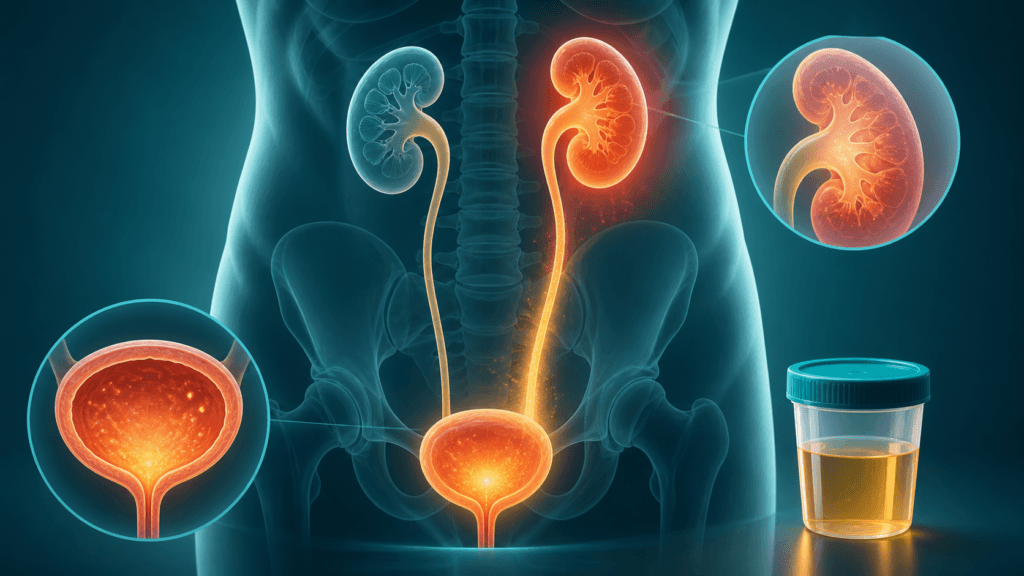
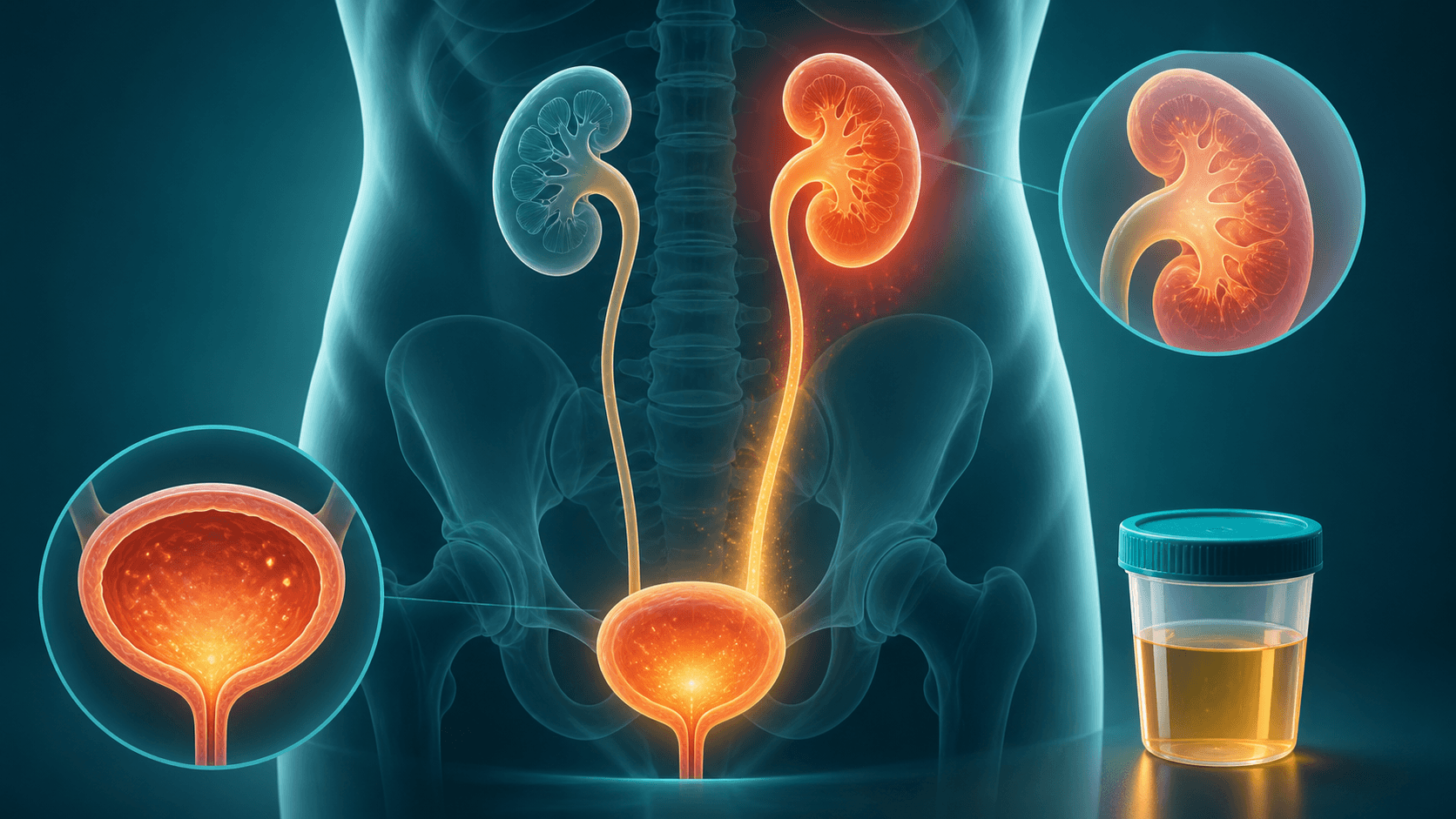
The urinary tract includes the kidneys, ureters, bladder, and urethra. Many kidney infections begin when bacteria infect the bladder and travel upward through a ureter to one or both kidneys. Less commonly, infection reaches a kidney through the bloodstream.
Most properly treated kidney infections recover without lasting damage. Delayed or inadequate treatment can lead to an abscess, kidney scarring, kidney failure, or sepsis.
Kidney Infection Versus Bladder UTI
| Feature | Lower UTI or bladder infection | Possible kidney infection |
|---|---|---|
| Urination | Burning, urgency, frequent small amounts | May have the same symptoms, or urinary symptoms may be mild |
| Pain | Lower abdominal or pelvic discomfort | Pain in the back, side, or below the ribs |
| Fever | Often absent or low | More likely, sometimes with chills |
| Whole-body symptoms | Usually limited | Weakness, nausea, vomiting, feeling very unwell |
| Urgency | Needs timely medical advice | Needs prompt same-day assessment; emergency care if severe |
Symptoms overlap. A patient can have a kidney infection without obvious burning urine, especially an older adult, child, pregnant person, or someone with diabetes or low immunity.
Common Kidney Infection Symptoms
- fever and chills;
- pain in the back, side, or groin;
- pain or tenderness below the ribs;
- burning or pain while urinating;
- frequent or urgent urination;
- cloudy, foul-smelling, or bloody urine;
- nausea or vomiting;
- marked weakness or fatigue; and
- abdominal discomfort.
Children may have fever, poor feeding, vomiting, irritability, abdominal pain, or bed-wetting after being dry. Older adults may present with weakness or confusion, although confusion can have many other causes and should not automatically be labelled a UTI.
Who Has a Higher Risk?
Anyone can develop a kidney infection. Risk can be higher in:
- women because of urinary anatomy;
- pregnant patients;
- people with a current or recent bladder infection;
- patients with kidney stones or another urinary blockage;
- men with an enlarged prostate;
- people who cannot empty the bladder fully;
- patients with diabetes, kidney disease, or low immunity;
- people with a urinary catheter;
- children with urinary reflux or structural differences; and
- people with repeated urinary infections.
Kidney Infection Warning Signs
Go to emergency care for:
- confusion, fainting, unusual sleepiness, or severe weakness;
- difficulty breathing, very fast breathing, or blue lips;
- cold or mottled skin, a very fast pulse, or low blood pressure;
- inability to keep fluids or medicines down;
- very little or no urine;
- severe back, side, or abdominal pain;
- high fever with shaking chills;
- pregnancy with fever or urinary symptoms;
- symptoms in a baby or a frail older adult; or
- rapid worsening despite antibiotics.
These signs may indicate dehydration, obstruction, sepsis, or another serious condition. A kidney stone blocking infected urine is especially urgent because antibiotics alone may not relieve the blockage.
Which Tests May Be Needed?
Urinalysis
Urinalysis checks a urine sample for white cells, blood, nitrites, and other findings. The collection method matters. A clean-catch midstream sample reduces contamination. Follow the laboratory’s instructions.
Urine Culture
A urine culture tries to identify the organism and which antibiotics may work. Whenever medically safe, the sample is collected before the first antibiotic dose. Previous antibiotics can affect the result.
Blood Tests
A doctor may order a blood count, kidney function, electrolytes, blood sugar, inflammation markers, or blood cultures. These help assess severity and complications.
Ultrasound or CT Scan
Imaging is not needed for every uncomplicated infection. It may be advised for severe illness, suspected kidney stone or blockage, repeated infections, unusual anatomy, poor response to treatment, pregnancy, or concern about an abscess. Ultrasound avoids radiation; CT can provide more detailed information in selected cases.
Why a Positive Urine Report Is Not the Whole Diagnosis
Bacteria can appear because a sample was contaminated, and some people—especially certain older adults—may have bacteria in urine without symptoms. On the other hand, an early infection may not show every expected finding. Clinicians interpret the report with symptoms, examination, pregnancy status, health conditions, and prior antibiotic use.
Do not take antibiotics merely because an old or routine report says “bacteria present.” Do not ignore fever and side pain because a dipstick was negative.
How Is a Kidney Infection Treated?
Antibiotics are the main treatment. The medicine, route, and duration depend on severity, culture results, allergies, kidney function, pregnancy, local resistance, and recent antibiotic exposure. Mild illness may sometimes be treated with oral medicine and close follow-up. Severe illness may require hospital admission, intravenous antibiotics, fluids, and monitoring.
If a stone, enlarged prostate, or another obstruction traps infected urine, a urologic procedure may be needed to drain the urinary system. Treating the blockage can be as important as treating the bacteria.
Antibiotic Safety
- Do not use leftover antibiotics or share medicines.
- Tell the clinician about allergies and previous reactions.
- Take the medicine exactly as prescribed.
- Do not stop early unless the clinician changes the plan.
- Seek help for swelling of the face, breathing difficulty, severe rash, or another serious reaction.
- Return for review if symptoms do not improve as expected.
Antibiotic resistance is a major reason to obtain a culture when advised and avoid unnecessary treatment.
What Can You Do at Home During Recovery?
Rest and drink fluids as advised. Patients with heart failure, advanced kidney disease, or a fluid restriction should not increase fluids without medical guidance. Use only fever or pain medicine recommended for you; some painkillers can be harmful in kidney disease, dehydration, pregnancy, stomach ulcers, or with certain medicines.
Do not rely on cranberry products, alkalising powders, herbs, or home remedies to treat a kidney infection. They cannot replace antibiotics or drainage of an obstruction.
How Quickly Should Symptoms Improve?
Many patients begin to feel better after effective treatment, but the timing varies. Fever or pain that continues, returns, or worsens needs review. A clinician may check culture results, resistance, obstruction, an abscess, or a different diagnosis.
Complete follow-up when advised, even if symptoms settle, particularly during pregnancy, childhood, repeated infections, or complicated disease.
Preventing Urinary Infections
- Do not delay urination for long periods.
- Drink an appropriate amount of safe fluid for your health condition.
- Empty the bladder after sexual activity when practical.
- Wipe from front to back after using the toilet.
- Avoid unnecessary intimate washes and harsh products.
- Manage diabetes with medical guidance.
- Seek care for kidney stones, prostate symptoms, or incomplete emptying.
- Use urinary catheters only when medically needed and follow catheter-care instructions.
Repeated infections need evaluation rather than repeated self-treatment. A clinician may look for stones, urinary retention, anatomical differences, or another risk factor.
Kidney Infection During Pregnancy
Pregnancy increases the risk that a urinary infection can reach the kidneys. Fever, urinary symptoms, back or side pain, vomiting, or contractions need prompt obstetric assessment. Kidney infection during pregnancy can affect both parent and baby and often requires hospital-based treatment.
Kidney Infection in Men
Urinary infection is less common in younger men and may be associated with prostate inflammation, blockage, stones, or another condition. Fever, pelvic or side pain, difficulty urinating, or poor urine flow deserves medical evaluation. Do not repeat antibiotics without a diagnosis.
Kidney and Urology Care in Varanasi
Infinity Care Hospital lists urology, nephrology and dialysis, pathology, radiology, general medicine, critical care, and emergency services. Its urology department treats kidney and urinary tract disorders, while the care-centre page describes renal and critical-care support. Severe symptoms should go directly to emergency care.
Frequently Asked Questions
Can a bladder UTI become a kidney infection?
Yes. Bacteria can travel upward from the bladder. Timely assessment and appropriate treatment lower this risk.
Can kidney infection occur without burning urine?
Yes. Fever, chills, side pain, vomiting, or weakness may be more noticeable than urinary symptoms.
Is back pain always a kidney infection?
No. Muscle strain, spine problems, stones, gallbladder disease, and other causes can produce back or side pain. Fever and urinary symptoms increase concern but do not confirm the diagnosis.
Can a kidney infection heal without antibiotics?
A suspected kidney infection should not be left untreated. Bacterial kidney infections generally need appropriate antibiotics and sometimes hospital care.
Is blood in urine normal with a UTI?
It can occur, but visible blood needs medical assessment because stones, tumours, kidney disease, and other conditions can also cause it.
When is admission needed?
Admission may be needed for severe illness, sepsis, pregnancy, vomiting, dehydration, obstruction, poor response to oral medicine, low immunity, or serious associated conditions.
Key Takeaway
A bladder infection often causes burning and frequent urination. Fever, chills, vomiting, or back and side pain raise concern for a kidney infection. Prompt urine testing and clinician-directed antibiotics are important. Confusion, breathing difficulty, very low urine output, severe pain, pregnancy, or rapid worsening requires urgent care.
Medical note: This article is educational and does not recommend a specific antibiotic or dose.