
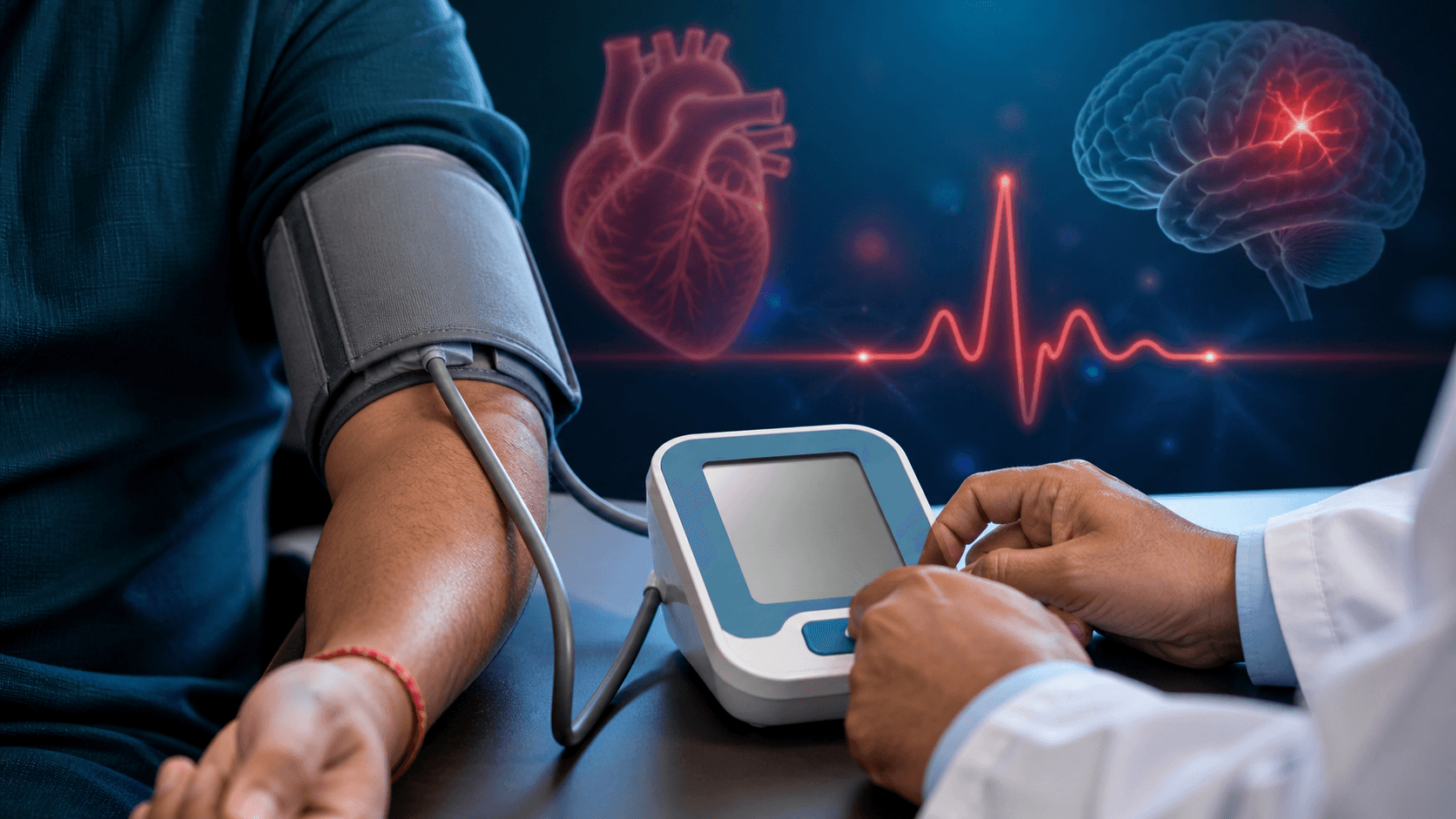
A very high blood pressure reading can be frightening. The safest response depends on both the number and the symptoms. A reading above 180/120 mm Hg may be severe hypertension, while the same range with chest pain, breathlessness, weakness, vision change, or difficulty speaking can be a hypertensive emergency.
This guide explains hypertensive emergency symptoms, how to repeat a reading correctly, when to contact a doctor, and when to seek immediate emergency care. It is general education for non-pregnant adults; pregnancy-related high blood pressure needs its own urgent pathway.
What Is a Hypertensive Crisis?
A hypertensive crisis is a sudden, severe rise in blood pressure, generally above 180 systolic or 120 diastolic. Doctors distinguish between severe hypertension without signs of new organ damage and a hypertensive emergency where the high pressure is accompanied by symptoms or evidence that the brain, heart, kidneys, eyes, lungs, or major blood vessels may be affected.
The number matters, but symptoms and medical evaluation determine the emergency. Do not try to make this distinction with home remedies.
Severe Hypertension Versus Hypertensive Emergency
| Situation | What you may notice | Recommended action |
|---|---|---|
| Single high reading | Above 180/120 after stress, activity, pain, or incorrect technique | Sit quietly, check technique, repeat after at least one minute |
| Repeated severe reading without new concerning symptoms | Second reading remains above 180/120 | Contact a qualified clinician promptly for instructions |
| Hypertensive emergency | Severe reading plus chest pain, breathlessness, weakness, numbness, vision change, speech trouble, confusion or another alarming symptom | Call emergency services or go to an emergency department immediately |
| Pregnancy or recent delivery | High blood pressure, severe headache, vision change, upper abdominal pain, swelling, breathlessness or seizures | Urgent obstetric emergency assessment |
Do not drive yourself when you have neurological symptoms, severe chest pain, breathlessness, faintness, or confusion.
Hypertensive Emergency Warning Signs
Emergency symptoms with very high blood pressure may include:
- chest pain, pressure, or tightness;
- shortness of breath;
- sudden severe headache;
- new weakness or numbness, especially on one side;
- difficulty speaking or understanding speech;
- new confusion, seizure, fainting, or loss of consciousness;
- sudden change or loss of vision;
- severe back, chest, or abdominal pain;
- cough with frothy sputum or severe breathing difficulty;
- very little urine; or
- rapid worsening of any new symptom.
These can indicate stroke, heart attack, aortic dissection, fluid in the lungs, kidney injury, or another emergency. Do not wait for the pressure to fall by itself.
What to Do With a Reading Above 180/120
- Stop activity and sit quietly. Keep both feet on the floor and support your back.
- Check the cuff. It should fit the upper arm and rest on bare skin, not over clothing.
- Keep the arm supported at heart level. Do not talk during measurement.
- Wait at least one minute and repeat.
- Check for new symptoms. Chest pain, breathlessness, weakness, numbness, vision or speech change makes this an emergency.
- Act on the result. With symptoms, seek immediate emergency care. Without symptoms but a repeated severe reading, contact a clinician promptly.
Do not keep repeating the measurement every minute for a long period while serious symptoms continue.
Do Not Take an Extra Dose Without Advice
Rapidly lowering blood pressure at home can reduce blood flow to the brain, heart, or kidneys. Do not double a missed tablet, borrow someone else’s medicine, place a tablet under the tongue, or use an unprescribed “fast-acting” drug unless a clinician who knows your situation specifically instructs you.
Bring all medicine strips or a current medicine list to the hospital. Tell the team about missed doses, recent medicine changes, painkillers, cold medicines, steroids, herbal products, alcohol, and recreational drugs.
Why Blood Pressure May Rise Suddenly
Possible triggers include missed medicines, an incorrect dose, severe pain, anxiety, kidney disease, stroke, heart problems, pregnancy complications, sleep apnoea, endocrine conditions, and interactions with medicines or substances. Some decongestants, anti-inflammatory painkillers, stimulants, and steroids can raise blood pressure in susceptible people.
A trigger does not prove that no organ damage is occurring. Symptoms and examination still guide urgency.
Can Anxiety Cause a Very High Reading?
Anxiety, pain, talking, recent exercise, caffeine, nicotine, a full bladder, and a poorly fitting cuff can temporarily raise a reading. This is why correct technique and a repeat measurement are useful when there are no emergency symptoms.
However, do not label chest pain, weakness, severe headache, or breathlessness as “just anxiety” because the person feels worried. Emergencies themselves cause anxiety.
How Doctors Evaluate a Hypertensive Emergency
The emergency team confirms the blood pressure and looks for organ injury. Assessment may include:
- neurological, heart, lung, eye, and circulation examinations;
- electrocardiogram;
- blood counts, kidney function, electrolytes, cardiac markers, and other tests;
- urine testing;
- chest X-ray;
- CT or MRI when stroke, bleeding, or aortic disease is suspected; and
- pregnancy-specific assessment when relevant.
Not every patient needs every test. The symptoms and examination determine the urgent pathway.
How Is a Hypertensive Emergency Treated?
When acute organ damage is suspected, hospital teams use monitored treatment, often with intravenous medicines. Blood pressure is usually reduced in a controlled way rather than forced to normal immediately. The safe target and speed depend on the condition; stroke, aortic dissection, heart failure, pregnancy complications, and other emergencies require different strategies.
Severe hypertension without organ-damage symptoms is often managed with timely adjustment or restart of oral medicine and close follow-up. It should still be taken seriously, but immediate hospital admission is not always required. A qualified clinician should decide.
High Blood Pressure Usually Has No Symptoms
Most chronic hypertension causes no warning signs. Feeling normal does not prove that blood pressure is controlled, and headache alone is not a reliable measure. Regular, correctly performed readings and medical follow-up are the only way to know.
How to Measure Blood Pressure Correctly at Home
- Avoid exercise, smoking, and caffeine for about 30 minutes beforehand when possible.
- Empty the bladder and rest quietly for five minutes.
- Sit with back supported, feet flat, and legs uncrossed.
- Place a validated upper-arm cuff on bare skin.
- Support the arm at heart level.
- Do not talk or use a phone during the reading.
- Take two readings about one minute apart and record them.
Measure at consistent times if your clinician asks you to keep a log. Record medicine timing and symptoms, not only the best number.
Blood Pressure Numbers for General Understanding
| Category | Systolic | Diastolic |
|---|---|---|
| Normal | Below 120 | Below 80 |
| Elevated | 120–129 | Below 80 |
| Stage 1 hypertension | 130–139 | 80–89 |
| Stage 2 hypertension | 140 or higher | 90 or higher |
| Severe range | Above 180 | And/or above 120 |
Diagnosis is usually based on repeated readings and clinical context, not one home measurement. Thresholds and treatment targets may differ with pregnancy, age, kidney disease, diabetes, or other conditions.
Pregnancy and Very High Blood Pressure
High blood pressure during pregnancy or after delivery can signal pre-eclampsia or eclampsia. Urgent warning signs include severe headache, vision changes, upper-right abdominal pain, sudden swelling, breathlessness, reduced fetal movement, or seizures. Pregnant and recently delivered patients should contact obstetric emergency services immediately rather than following a general adult home plan.
Preventing Future Crises
- Take medicines consistently and refill them before they run out.
- Do not stop treatment because readings improve.
- Attend follow-up and bring a blood pressure log.
- Limit salt as advised and choose balanced meals.
- Avoid tobacco and manage alcohol intake.
- Be physically active according to medical guidance.
- Ask before using decongestants, anti-inflammatory painkillers, stimulants, or herbal products.
- Manage diabetes, kidney disease, sleep apnoea, and cholesterol.
- Know your emergency symptoms and nearest appropriate facility.
What to Carry to Emergency Care
Carry the blood pressure log, medicine list, allergies, medical reports, identification, and contact details for a family member. Note when symptoms began because time affects treatment for stroke and heart attack. Do not delay departure to collect every document.
Emergency and Cardiac Care in Varanasi
Infinity Care Hospital states that it provides 24×7 emergency services, cardiac emergency and critical-care support, cardiology, nephrology, neurology, radiology, and pathology. Review its hospital services for general information. In an emergency, call local emergency services or go to the nearest capable emergency department immediately.
Frequently Asked Questions
Is 180/120 always an emergency?
It is a severe reading requiring prompt attention. When it occurs with chest pain, breathlessness, weakness, numbness, vision change, speech difficulty, or another new concerning symptom, it is an emergency.
Should I lie down if my blood pressure is very high?
Sit quietly while repeating the measurement if you have no emergency symptoms. If you feel faint, have chest pain, or are breathless, call for emergency help and follow dispatcher instructions.
Can I take two tablets to lower it quickly?
Do not take an extra dose unless a qualified clinician specifically directs you. An unsafe rapid fall can be harmful.
Can high blood pressure cause a stroke?
Yes. Long-term uncontrolled hypertension increases stroke risk, and a hypertensive emergency may accompany acute brain injury.
What if the second reading is lower?
Record both readings. If emergency symptoms are present, seek care regardless of a lower repeat. Without symptoms, contact your clinician if readings remain unusually high.
Can a wrist monitor be used?
Upper-arm validated devices are generally preferred. Wrist readings are sensitive to position. Bring your device to a clinic to compare it with a professional measurement.
Key Takeaway
For a blood pressure above 180/120, sit quietly and repeat it after at least one minute if there are no emergency symptoms. A repeated severe reading needs prompt professional advice. Severe pressure with chest pain, breathlessness, weakness, numbness, vision or speech change, confusion, or severe back pain requires immediate emergency care. Never delay while trying home remedies or extra medicine.
Medical note: This article does not provide individual blood pressure targets or medication instructions.