Sudden pain in the upper-right abdomen after a heavy meal may come from the gallbladder, but acidity, liver problems, pancreatitis, ulcers, and even heart conditions can feel similar. Gallstones are common, and many cause no symptoms. The important question is whether a stone is blocking bile flow or causing inflammation.
This guide explains gallstone symptoms, the usual pain pattern, warning signs, ultrasound and other tests, and common treatment options. It is educational information, not a personal diagnosis.
What Are Gallstones?
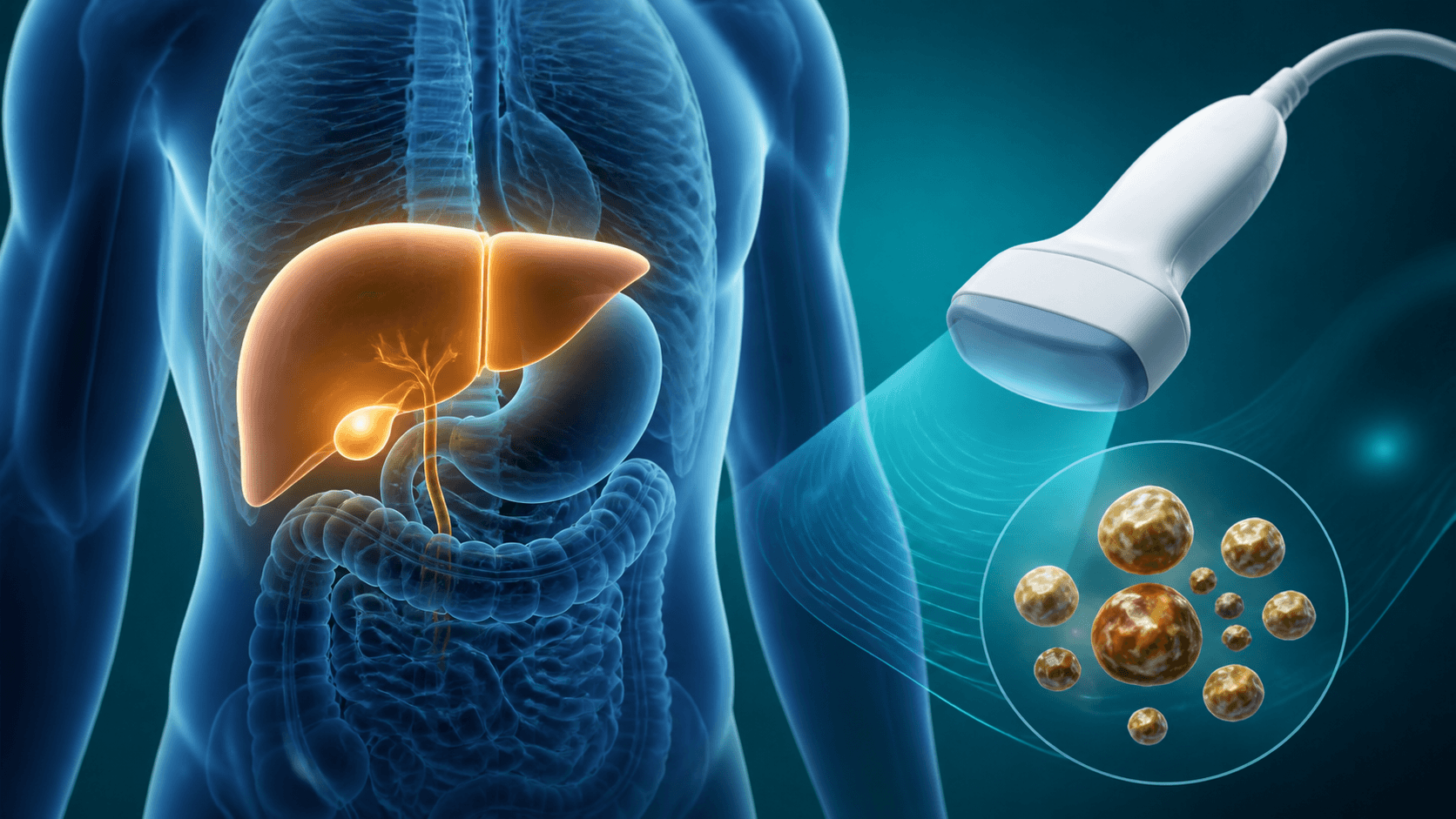
The gallbladder is a small organ below the liver. It stores bile, a digestive fluid made by the liver. Gallstones are hard, pebble-like pieces that form inside the gallbladder. They may be made mainly of cholesterol or pigment and can range from tiny grains to larger stones.
Many people have “silent” gallstones that never block a duct or cause pain. These are often found during an ultrasound performed for another reason. Silent stones usually do not need treatment, but a clinician should interpret the finding in the context of the patient’s health.
What Does Gallstone Pain Feel Like?
A gallbladder attack, also called biliary colic, often begins when a stone temporarily blocks the outlet of the gallbladder. Typical features include:
- steady pain in the upper-right abdomen or upper-middle abdomen;
- pain that may spread to the back or right shoulder blade;
- pain beginning after a heavy or fatty meal;
- pain occurring in the evening or at night;
- nausea or vomiting; and
- an episode lasting from around 30 minutes to several hours.
The pain is often intense and steady rather than a few seconds of mild discomfort. However, not every patient has a textbook pattern. Older adults, people with diabetes, and pregnant patients may need earlier assessment.
Gallstones, Acidity or Another Cause?
| Feature | Gallstone attack | Acidity or reflux | Possible pancreatitis | Possible heart problem |
|---|---|---|---|---|
| Common location | Upper right or upper middle abdomen | Burning behind breastbone or upper abdomen | Upper abdomen, often spreading to back | Chest or upper abdomen; may spread to arm, jaw or back |
| Timing | Often after a heavy meal; may last hours | Often after meals or lying down | Usually persistent and severe | May occur with effort or at rest |
| Other clues | Nausea; repeat attacks | Sour taste, burping | Repeated vomiting, marked tenderness | Sweating, breathlessness, weakness |
| Action | Medical assessment | Review if frequent or severe | Urgent assessment | Emergency assessment |
Symptoms overlap. Do not assume upper abdominal pain is “gas,” especially when it is severe, new, or accompanied by sweating, shortness of breath, faintness, or chest pressure.
Warning Signs of a Gallstone Complication
Seek urgent medical care if pain lasts several hours or occurs with:
- fever or chills;
- yellow skin or yellow eyes;
- dark, tea-coloured urine;
- pale or clay-coloured stool;
- repeated vomiting;
- a very tender or rigid abdomen;
- confusion, fainting, or severe weakness;
- rapid heartbeat or breathing difficulty; or
- pain that becomes severe and continuous.
These signs can occur with inflammation of the gallbladder, infection in the bile ducts, blockage of the common bile duct, or pancreatitis. Delayed treatment can be dangerous.
Why Do Gallstones Form?
Stones may form when bile contains too much cholesterol or bilirubin, too few bile salts, or when the gallbladder does not empty well. Risk is influenced by several factors, but having a risk factor does not prove that pain is from gallstones.
Factors That Can Increase Risk
- female sex and increasing age;
- pregnancy or increased oestrogen exposure;
- overweight or obesity;
- very rapid weight loss or repeated crash dieting;
- diabetes or metabolic conditions;
- family history;
- certain blood, liver or intestinal conditions; and
- some medicines or nutrition delivered through a vein for a long period.
Which Tests Diagnose Gallstones?
Abdominal Ultrasound
Ultrasound is usually the first imaging test for suspected gallstones. It uses sound waves and does not use ionising radiation. It can show stones, gallbladder wall changes, bile-duct widening, and other clues. The report must be combined with symptoms and examination.
Blood Tests
A doctor may order a complete blood count, liver tests, bilirubin, kidney tests, electrolytes, and pancreatic enzymes. Abnormal results can suggest infection, obstruction, dehydration, or pancreatitis, but normal tests do not automatically exclude a gallbladder problem.
Other Imaging or Procedures
When the diagnosis is unclear or a common bile-duct stone is suspected, clinicians may use CT, MRI-based cholangiography, endoscopic ultrasound, or another specialised test. ERCP is an endoscopic procedure that can remove stones from the common bile duct in selected patients. It is not the routine first test for simple gallbladder stones.
Do All Gallstones Need Surgery?
No. Silent stones found by chance often need no immediate treatment. Symptomatic stones are different because attacks commonly return and complications can occur. The usual definitive treatment for recurrent symptomatic gallstones is removal of the gallbladder, called cholecystectomy.
The decision depends on symptoms, imaging, complications, age, other illnesses, anaesthesia risk, and the surgeon’s assessment. A person with fever, jaundice, pancreatitis, or an infected gallbladder may need more urgent treatment than someone with occasional uncomplicated pain.
Laparoscopic Gallbladder Surgery
Most planned gallbladder removals are performed laparoscopically through several small cuts. The surgeon removes the gallbladder, not only the visible stones, because leaving the gallbladder allows new stones and repeat attacks. Some patients need open surgery when inflammation, scarring, anatomy, or another problem makes that safer.
The gallbladder is useful but not essential. After removal, bile flows directly from the liver to the small intestine. Many people return to normal eating after recovery, although temporary loose stool or difficulty with very fatty foods can occur.
Can Medicines Dissolve Gallstones?
Bile-acid medicines can dissolve some small cholesterol stones, but they work slowly, are suitable only for selected patients, and stones may return. They are generally considered when surgery is not suitable. Home remedies and “gallbladder flushes” have not been shown to safely remove stones and may delay urgent care.
What to Do During Suspected Gallstone Pain
- Stop heavy food and note when the pain began.
- Do not take someone else’s painkiller or antibiotic.
- Seek medical assessment, especially if this is the first severe episode.
- Go urgently for fever, jaundice, repeated vomiting, chest symptoms, faintness, or pain lasting hours.
- Carry previous ultrasound reports, medicine lists, allergies, and health records.
A clinician may advise fasting while urgent tests are arranged. Follow the treating team’s instructions rather than forcing food or fluid during severe vomiting or before a possible procedure.
Food Habits While Waiting for Medical Advice
Smaller meals with less fried or very fatty food may reduce attacks for some people, but diet does not remove established stones. Choose balanced meals with vegetables, whole grains, pulses, lean proteins, and healthy fats in moderate amounts. Avoid crash diets because very rapid weight loss can increase stone formation.
Patients with diabetes, pregnancy, kidney disease, or another condition should receive individual diet advice. Do not follow prolonged fasting or extreme “detox” plans.
Preparing for a Gallbladder Consultation
Write down the exact location, duration, and trigger of pain. Mention fever, jaundice, vomiting, stool or urine colour changes, weight change, pregnancy possibility, medicines, past operations, and previous attacks. Bring ultrasound images or reports, not only a verbal summary.
Gallstone Care in Varanasi
Infinity Care Hospital lists gastroenterology, general surgery and laparoscopy, gastrointestinal surgery, radiology, pathology, anaesthesia, and emergency care. Patients can learn about the hospital’s gastroenterology service and general surgery and laparoscopy department. Severe pain with fever, jaundice, vomiting, or collapse requires emergency care.
Frequently Asked Questions
Can gallstones disappear naturally?
Established stones usually do not simply disappear. Some remain silent for years, while others cause blockage. A clinician decides whether observation or treatment is appropriate.
Is a 5 mm gallstone dangerous?
Size alone does not determine risk. Small stones may move into a bile duct, while large stones may remain in the gallbladder. Symptoms, stone location, duct findings, and inflammation matter.
Can gallstone pain go away without treatment?
A temporary blockage may move and pain can stop, but attacks often return. Pain relief does not prove that the underlying risk is gone.
Can ultrasound miss gallstones?
Ultrasound is very useful for gallbladder stones, but no test is perfect. Very small stones, duct stones, body factors, or another condition may require additional evaluation.
Is gallbladder surgery always an emergency?
No. Many operations are planned. Acute inflammation, infection, jaundice, pancreatitis, or a persistent blockage may require urgent admission or intervention.
Can I live normally without a gallbladder?
Most people can. Bile continues to reach the intestine directly from the liver. Follow the surgeon’s recovery and diet instructions.
Can gallstones cause only indigestion?
Bloating, fullness, or indigestion alone is not specific for gallstones and may come from many digestive conditions. When ultrasound shows stones, the clinician still checks whether the symptom pattern truly matches gallbladder disease before recommending surgery. This helps avoid treating an incidental scan finding while missing another cause.
Key Takeaway
Gallstones may be silent, but upper-right abdominal pain after meals, repeated attacks, or pain with fever or jaundice deserves medical evaluation. Ultrasound is usually the first imaging test. Symptomatic stones often need surgical review, while emergency warning signs should never wait.
Medical note: This article is general education. Do not use it to diagnose abdominal or chest pain or to choose medicines.