Swollen Feet & Ankles: Causes You Should Check
Swollen feet causes in Varanasi is a useful local health topic because many people notice swelling after long standing, heat exposure, travel, pregnancy or illness but are unsure when it is normal and when it needs testing. Swelling may be harmless and temporary, but persistent or sudden swelling can be linked to heart, kidney, liver, thyroid, vein or medication-related problems. This article explains common causes, warning signs, tests and when medical consultation is important. It is written for adults, elderly people, pregnant women and families in Varanasi and nearby districts.Answer First: When Is Foot Swelling Serious?
Foot or ankle swelling needs medical attention if it is sudden, one-sided, painful, associated with breathlessness, chest pain, reduced urination, fever, redness, pregnancy-related symptoms or swelling of the face and hands. The British Heart Foundation notes that persistent or sudden severe swelling in ankles and feet can sometimes signal heart, kidney, liver or circulatory problems.If swelling is mild after standing all day and improves with rest, it may be less urgent. But swelling that keeps returning should not be ignored.Common Causes of Swollen Feet
- Standing or sitting for long hours
- Hot weather
- High salt intake
- Pregnancy
- Foot or ankle injury
- Varicose veins or poor circulation
- Heart failure
- Kidney disease
- Liver disease
- Thyroid problems
- Certain medicines
- Blood clot in leg
Swelling Pattern Comparison
| Swelling Pattern | Possible Clue | Suggested Step |
|---|---|---|
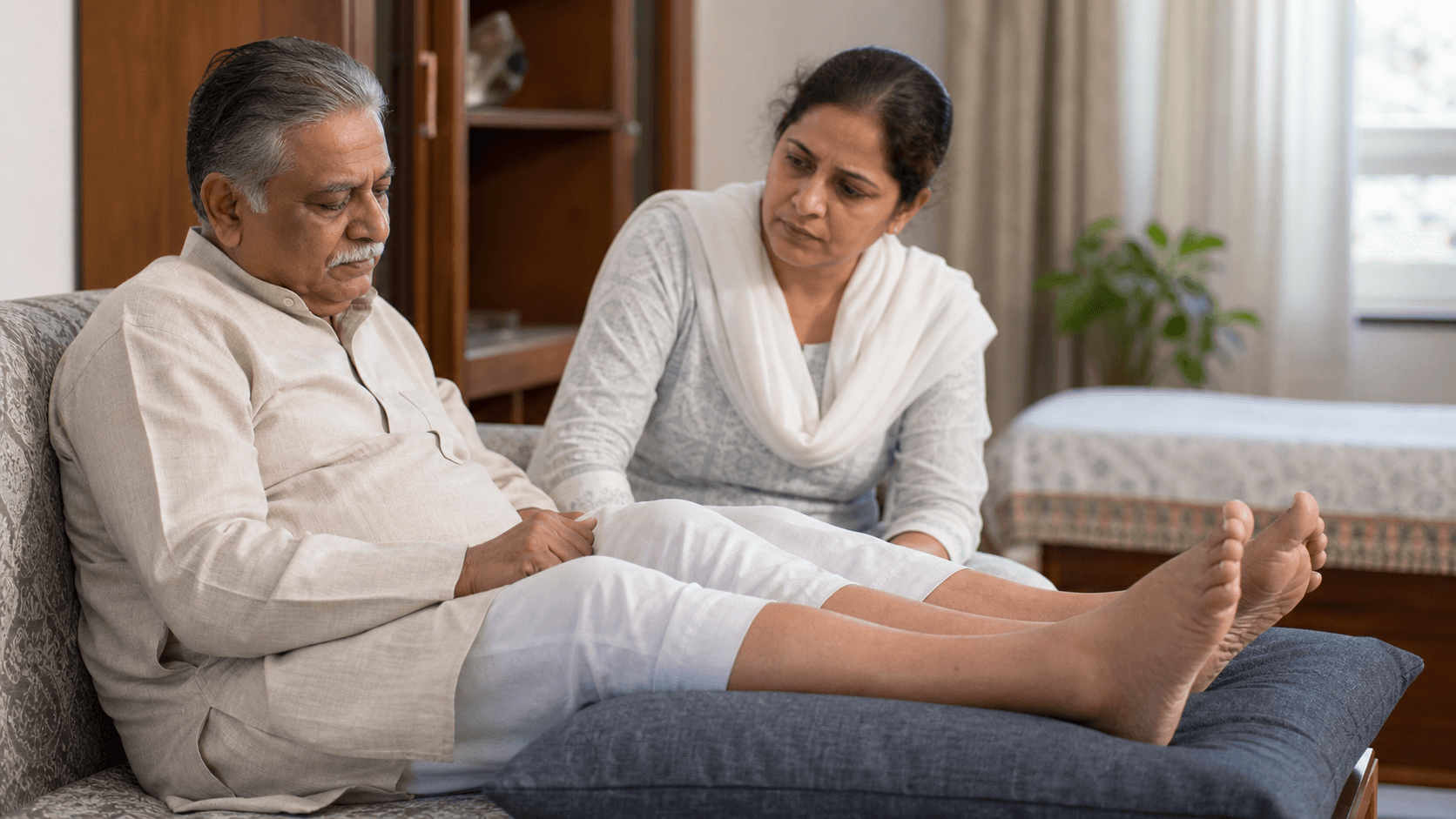
| Both feet swollen after standing | Fluid pooling or heat-related swelling possible | Rest, leg elevation, consult if repeated |
| One leg swollen and painful | Injury, infection or clot possible | Urgent evaluation |
| Swelling with breathlessness | Heart or lung issue possible | Emergency care |
| Swelling with reduced urine | Kidney issue possible | Medical consultation and tests |
| Swelling in pregnancy with headache | Pregnancy BP concern possible | Contact doctor promptly |
Heart-Related Swelling
When the heart does not pump efficiently, fluid may collect in the legs and ankles. This swelling may be worse in the evening and may come with breathlessness, tiredness, difficulty lying flat or sudden weight gain. People with high BP, previous heart disease, diabetes or elderly age should take persistent swelling seriously.Kidney-Related Swelling
Kidneys help remove extra fluid and waste. Kidney-related swelling may appear in feet, ankles, face or around the eyes. Reduced urination, frothy urine, high BP, nausea or weakness may also occur. Blood and urine tests can help evaluate kidney function.Vein Problems and Long Standing
People who stand for long hours, such as shopkeepers, teachers, workers and security staff, may notice evening swelling. Vein valves may become weak over time, allowing blood to pool in the lower legs. Varicose veins, heaviness, cramps and skin darkening may also be seen.Swelling in Pregnancy
Mild foot swelling can happen during pregnancy, especially later months. However, sudden swelling of face or hands, severe headache, vision changes, upper abdominal pain or high BP needs urgent medical advice. Pregnant women should not take water tablets or home medicines without doctor guidance.Tests Doctors May Recommend
| Test | Purpose |
|---|---|
| Blood pressure check | Checks hypertension or pregnancy-related BP issues |
| Kidney function test | Checks creatinine, urea and fluid balance |
| Urine test | Checks protein or kidney-related signs |
| Liver function test | Used if liver-related swelling is suspected |
| ECG/2D Echo | May be used for heart-related symptoms |
| Doppler ultrasound | May be used for vein or clot assessment |
Home Steps for Mild Swelling
- Elevate legs when resting
- Avoid sitting or standing in one position for too long
- Reduce excess salt
- Walk regularly if safe
- Drink adequate water
- Wear comfortable footwear
- Review medicines with a doctor if swelling started after a new drug
What Not to Do
Do not start water tablets without a doctor. Do not massage a painful one-sided swollen leg because a clot or infection may be present. Do not ignore swelling with breathlessness or chest pain. Do not assume swelling is only due to age if it is new or worsening.Why Swelling Should Be Diagnosed Properly
Swelling in the feet can look similar in different patients, but the cause may be completely different. One patient may have swelling because of long standing, another due to kidney disease, another due to heart failure and another due to a blood clot. This is why doctors look at symptoms, medical history, examination and tests together.Proper diagnosis helps avoid unnecessary medicines and prevents delay in serious conditions. A patient with mild evening swelling may need lifestyle changes, while a patient with swelling and breathlessness may need urgent care.Questions Doctors May Ask
- Is the swelling in one leg or both legs?
- When did it start?
- Does it reduce after sleep?
- Is there pain, redness or warmth?
- Is there breathlessness or chest discomfort?
- Has urine output changed?
- Are you pregnant?
- Did you start a new medicine recently?
- Do you have diabetes, BP, kidney, liver or heart disease?
Patient Scenarios That Need Attention
| Scenario | Possible Concern | Suggested Step |
|---|---|---|
| Shopkeeper has both feet swelling every evening | Standing-related swelling or vein issue possible | Consult if repeated or worsening |
| Diabetic patient has swelling with reduced urine | Kidney involvement possible | Blood and urine tests |
| Elderly patient has swelling with breathlessness | Heart-related fluid retention possible | Urgent evaluation |
| One calf is painful and swollen after travel | Blood clot risk possible | Emergency medical advice |