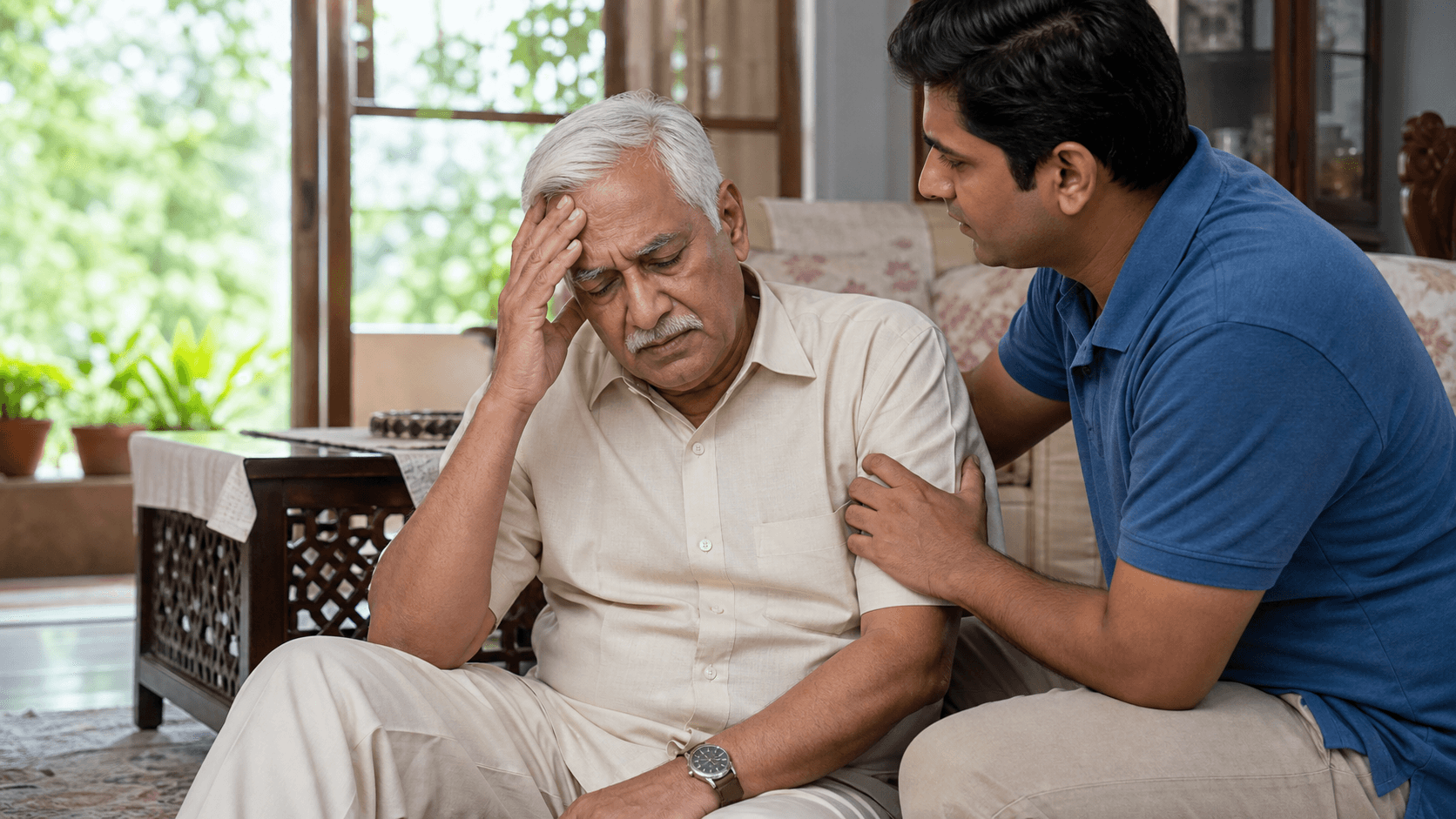
Head injury after fall or accident can be serious. Know concussion symptoms, danger signs, CT scan need and when emergency care is urgent.
Head Injury After Fall: Danger Signs to Watch
Head injury symptoms after fall Varanasi is an important local search because falls, two-wheeler accidents, sports injuries and elderly slips are common. Some head injuries look minor at first but can become serious later, especially in children, elderly people and patients taking blood thinners. This article explains concussion symptoms, danger signs, when CT scan may be needed, what to do immediately after a fall and what mistakes to avoid. It is written for families who need quick, practical guidance after a head hit or road accident.Answer First: When Is Head Injury an Emergency?
Head injury needs emergency care if the person loses consciousness, vomits repeatedly, has worsening headache, becomes confused, has seizure, weakness, slurred speech, unequal pupils, unusual behavior, severe drowsiness, bleeding from ear or nose, or cannot be awakened. The CDC lists worsening headache, repeated vomiting, weakness, seizures, slurred speech, unusual behavior, unequal pupils, confusion and loss of consciousness among danger signs after mild traumatic brain injury or concussion.If any danger sign is present, do not wait at home.Common Causes of Head Injury
- Slip and fall at home
- Bike or road accident
- Fall from stairs
- Sports injury
- Workplace injury
- Fall in elderly people
- Child falling from bed or furniture
- Assault or blow to head
Symptoms of Concussion
A concussion can happen even without visible bleeding. Symptoms may include headache, dizziness, nausea, vomiting, confusion, memory problems, sleepiness, blurred vision, sensitivity to light or noise, balance problems and feeling “not right.” Symptoms may appear immediately or develop over hours.Danger Sign Table
| Danger Sign | Why It Matters | Action |
|---|
| Repeated vomiting | May suggest brain irritation or pressure | Emergency care |
| Worsening headache | May indicate internal injury | Urgent evaluation |
| Loss of consciousness | Needs assessment even if brief | Emergency care |
| Weakness or slurred speech | Neurological issue possible | Emergency care |
| Bleeding from ear or nose | Skull injury possible | Emergency care |
Children After Head Injury
Children may not explain symptoms clearly. Watch for repeated vomiting, excessive crying, unusual sleepiness, refusal to feed, seizure, poor balance, behavior change, swelling on scalp or loss of consciousness. Babies and toddlers should be evaluated carefully after a significant fall.Elderly People After Fall
Elderly people are higher risk because falls are common and brain bleeding may occur even after seemingly minor injury, especially if they take blood thinners. Confusion, drowsiness, worsening headache, vomiting or weakness should be treated urgently. Families should not assume the person is only tired.When CT Scan May Be Needed
A doctor may advise CT scan if there are danger signs, loss of consciousness, repeated vomiting, severe headache, neurological symptoms, seizure, blood thinner use, elderly age, high-impact accident or suspected skull injury. Not every head injury needs CT, but the decision should be made after medical evaluation.What to Do Immediately
- Keep the person still and safe
- Check breathing and consciousness
- Apply gentle pressure for external bleeding
- Do not shake the person
- Do not give food or drink if drowsy or vomiting
- Note the time of injury
- Carry medicines and medical history
- Seek emergency care if danger signs appear
What Not to Do
Do not let the person drive after head injury. Do not ignore symptoms because there is no external wound. Do not give sleeping pills or alcohol. Do not massage the head. Do not delay care after a road accident, fall from height or injury in a patient on blood thinners.Observation at Home: Only If Doctor Allows
Some minor injuries may be observed at home after medical advice. During observation, watch for headache, vomiting, confusion, drowsiness, weakness, behavior change, seizures or worsening symptoms. Keep the person with a responsible adult and avoid risky activity until cleared.Why Observation Matters After Head Injury
Some symptoms appear immediately, while others develop after a few hours. This is why careful observation is important after a fall or accident. A responsible adult should watch for worsening headache, vomiting, confusion, drowsiness, weakness, seizures, behavior change or difficulty walking.If symptoms worsen, the patient should be taken for emergency evaluation. Do not wait until the next morning if danger signs appear at night.Two-Wheeler and Road Accident Head Injuries
In and around Varanasi, two-wheeler accidents are a common reason for head injury searches. A helmet can reduce risk, but symptoms after impact still matter. If a rider has confusion, vomiting, severe headache, bleeding, dizziness, memory gaps or sleepiness after an accident, medical evaluation should not be delayed. The person should avoid driving again after the injury.Family members should note whether the injured person remembers the accident, whether they were unconscious, whether alcohol was involved and whether there are injuries to the neck, spine, chest or limbs. These details help emergency teams assess risk.Falls at Home in Elderly People
Elderly people may fall in bathrooms, stairs, courtyards or while getting up at night. Even a low-height fall can be serious if the person is on blood thinners or has previous stroke, BP, diabetes or poor balance. Prevention matters: use bathroom support rails, keep floors dry, improve lighting, avoid loose rugs and review dizziness or weakness with a doctor.Return to Work, School or Sports
After a suspected concussion, the person should avoid strenuous activity, driving, sports and heavy screen use until medically cleared. Children should return to school or play gradually. If headache, dizziness, vomiting, confusion or vision symptoms return during activity, stop and seek medical advice.What Details to Share in Emergency
Tell the doctor the exact time of injury, how the person fell, whether there was loss of consciousness, whether vomiting occurred, whether the person is taking blood thinners and whether symptoms are improving or worsening. Carry old prescriptions and reports, especially for elderly patients with BP, diabetes, stroke or heart disease. These details can influence observation, CT scan decisions and specialist referral.When to Book a Follow-Up
Even after a mild head injury, follow-up may be needed if headache, dizziness, sleep problems, memory issues or concentration problems continue. Children, elderly people and patients on blood thinners should be monitored more carefully. Avoid driving or risky activity until symptoms are clearly improving.FAQs
Is vomiting after head injury serious?
Repeated vomiting after head injury is a danger sign and needs urgent evaluation. A doctor may advise observation or CT scan depending on symptoms.Can concussion happen without loss of consciousness?
Yes. A person can have concussion without fainting. Headache, dizziness, confusion, nausea or memory issues may still occur.When is CT scan needed after head injury?
CT may be needed for danger signs, high-impact injury, loss of consciousness, repeated vomiting, severe headache, elderly age or blood thinner use.Should a child sleep after head injury?
Sleep may be allowed only if the child has been assessed and has no danger signs. If the child is unusually drowsy or hard to wake, seek emergency care.Which doctor treats head injury?
Emergency doctors assess head injuries first. Neurology, neurosurgery, radiology or critical care may be involved depending on severity.When to Seek Medical Care
After a head injury, seek urgent care if there is vomiting, worsening headache, confusion, weakness, seizure, loss of consciousness or unusual behavior.