Reviewed by: Infinity Care Hospital Medical Team
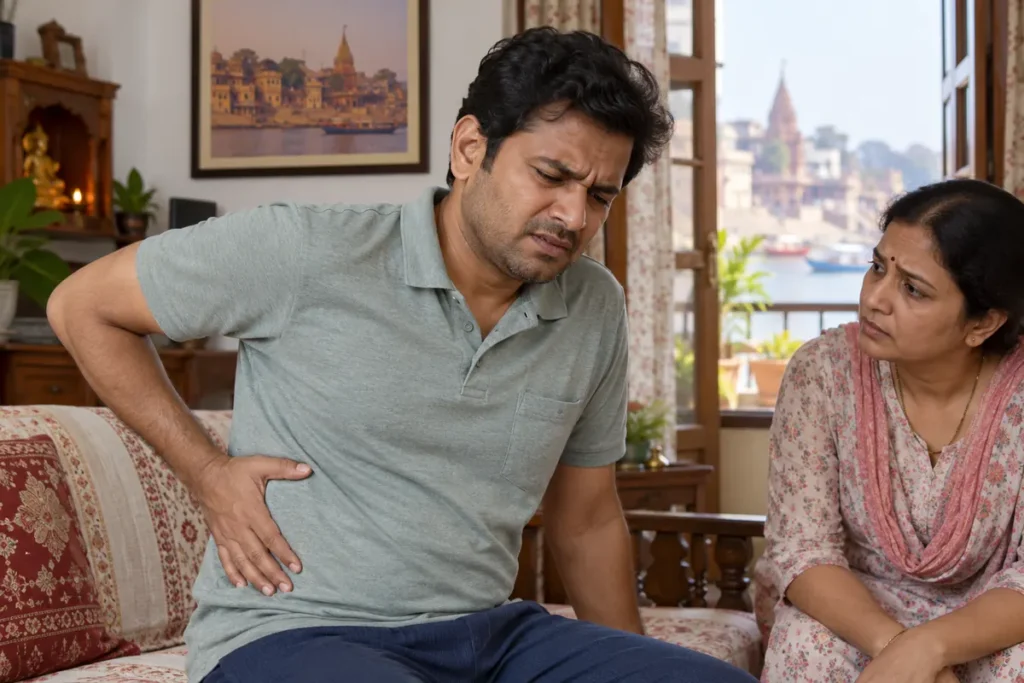
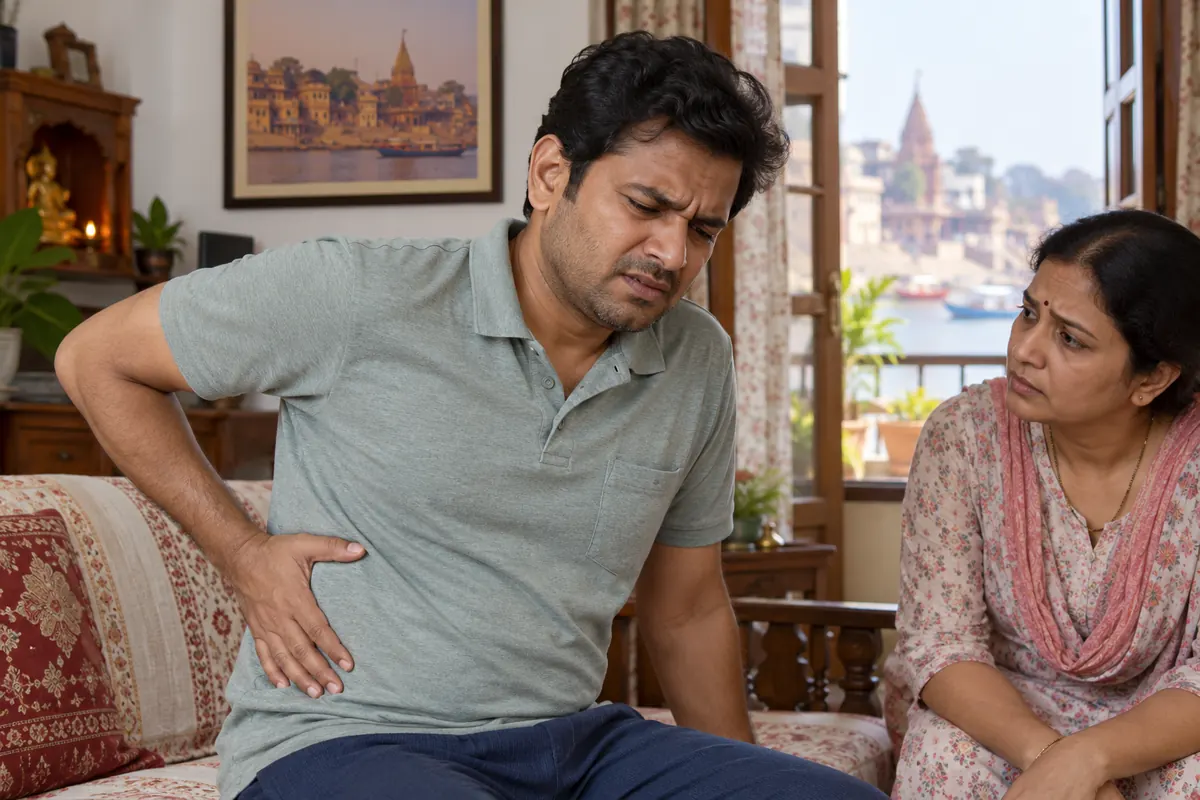
If you are searching for kidney stone symptoms in Varanasi, you may be trying to understand sudden pain in the side, back, lower abdomen or groin. Kidney-stone pain can be severe and may come in waves, but not every backache is caused by a stone. Blood in urine, burning urination, nausea, vomiting, fever or difficulty passing urine can provide important clues. This guide explains how kidney-stone pain usually behaves, which tests may be advised, what can be done safely while arranging care and which warning signs need urgent medical attention.
What is a kidney stone?
A kidney stone is a hard deposit formed from minerals and salts in urine. A stone may remain inside the kidney without causing symptoms. Pain often starts when it moves into the ureter, the narrow tube carrying urine from the kidney to the bladder. A small stone may pass naturally, while a larger stone can block urine flow or need a procedure. The size, position, type of stone, symptoms and presence of infection all influence treatment.
Hot weather, inadequate fluid intake, heavy sweating, a high-salt diet, some metabolic conditions, family history and previous stones can increase risk. People working outdoors, travelling for long hours or delaying water intake may become dehydrated. However, drinking less water is not the only cause, and a proper evaluation matters when symptoms occur.
Common kidney stone symptoms in Varanasi patients
Kidney-stone symptoms can begin suddenly or build gradually. According to the National Institute of Diabetes and Digestive and Kidney Diseases, common signs include sharp pain in the back, side, lower abdomen or groin, blood in urine, urinary urgency, painful urination and cloudy or foul-smelling urine.
- Severe pain below the ribs on one side of the back or abdomen.
- Pain that travels towards the lower abdomen, groin or genital area.
- Pain that rises and falls in waves rather than staying identical.
- Pink, red, tea-coloured or brown urine.
- Burning while urinating or needing to urinate repeatedly.
- Nausea, vomiting, sweating or restlessness during pain.
- Cloudy urine, unpleasant urine smell, fever or chills.
- Passing only a small amount of urine or being unable to urinate.
How kidney stone pain is different from muscle pain
Muscle pain often becomes worse when you bend, twist, lift something or press the sore area. It may follow physical work, exercise, a long two-wheeler ride or an awkward sleeping position. Kidney-stone pain is often deeper, severe and difficult to relieve by changing position. People may walk around or feel unable to sit still. The pain may shift downward as the stone moves.
These differences are not perfect diagnostic rules. A kidney infection, gallbladder problem, appendicitis, ovarian condition or spine problem can also cause side or abdominal pain. Pain location alone cannot confirm a stone. Urine testing and imaging help identify the cause.
When fever with kidney stone symptoms is an emergency
Fever or chills with suspected kidney-stone pain can indicate infection behind a urinary blockage. This can become dangerous because infected urine may not drain properly. Seek urgent medical care if severe side pain occurs with fever, shivering, repeated vomiting, confusion, extreme weakness, low blood pressure or reduced urine output. Do not wait at home for the stone to pass when infection is possible.
Urgent assessment is also important for people with one functioning kidney, known kidney disease, pregnancy, diabetes, reduced immunity or advanced age. Children with severe side pain or blood in urine should also be evaluated promptly.
Blood in urine: visible and hidden
A stone can irritate the urinary tract and cause blood in urine. Sometimes the colour visibly turns pink, red or brown. In other cases, blood is detected only during a urine test. Blood in urine should not automatically be blamed on a stone because infection, kidney disease, prostate problems, medicines and urinary cancers can also cause it.
Arrange medical assessment if you see blood in urine even when pain is mild. Seek faster care when bleeding is heavy, clots are present, urine flow stops, or blood is accompanied by fever, weakness or severe pain.
Tests commonly advised for suspected kidney stones
A doctor may ask when the pain began, where it travels, whether you have fever, urinary symptoms, previous stones, family history, medicines or pregnancy possibility. Examination may include the abdomen, back, hydration, temperature and blood pressure. The required tests depend on the situation.
| Test | What it may show | Why it is useful |
|---|---|---|
| Urine routine and microscopy | Blood, pus cells, crystals or infection clues | Helps separate stone symptoms from UTI |
| Urine culture | Bacteria causing infection | Useful with fever, burning or recurrent infection |
| Blood tests | Kidney function, infection and mineral levels | Important with vomiting, blockage or repeated stones |
| Ultrasound | Some stones, kidney swelling or urinary blockage | No ionising radiation and commonly used initially |
| CT scan | Stone size, exact location and obstruction | Used when detailed imaging is required |
The NIDDK urinary imaging guide explains that ultrasound and CT may be used depending on symptoms and medical history. The best test is selected individually; every patient does not need every scan.
Can a kidney stone pass without surgery?
Many small stones can pass through urine, but size is not the only factor. Location, swelling of the kidney, infection, pain control, urine flow and kidney function matter. A doctor may advise fluids, appropriate pain relief, medicines that may help the ureter relax in selected cases and follow-up imaging. Straining urine may help collect the stone for analysis.
Procedures may be considered when a stone is unlikely to pass, causes persistent obstruction, damages kidney function, is associated with infection or produces uncontrolled pain and vomiting. Options depend on stone characteristics and may include shock-wave treatment, ureteroscopy or other urological procedures.
What you can do while arranging medical care
Drink normal, steady amounts of water if you can keep fluids down and have not been told to restrict fluids. Do not force several litres quickly during severe pain or vomiting. Rest in a safe place and note fever, urine colour, urine quantity and pain movement. Carry previous scan reports and a list of medicines to the consultation.
Avoid starting antibiotics without a urine assessment and prescription. Do not repeatedly take painkillers if you have kidney disease, stomach ulcers, blood-thinning medicines, pregnancy or other health conditions. Herbal mixtures marketed for dissolving every stone may delay appropriate treatment and can interact with medicines.
Preventing another kidney stone
Prevention should be based on the stone type and medical history. For many people, spreading fluid intake through the day, reducing excess salt, maintaining a healthy weight and avoiding frequent dehydration are useful. Do not eliminate all dietary calcium unless specifically advised; very restrictive diets can be unhelpful. People with recurrent stones may need blood tests, urine collection or stone analysis.
During hot Varanasi weather or long outdoor work, carry safe drinking water and monitor urine colour. Pale yellow urine usually suggests better hydration, although medicines and foods can affect colour. People with heart or kidney failure should follow their clinician’s fluid advice rather than general internet recommendations.
When to seek urgent help
Go for urgent evaluation if pain is unbearable, fever or chills occur, vomiting prevents fluid intake, you cannot pass urine, urine output drops sharply, there is heavy bleeding, you feel faint or confused, or you have only one functioning kidney. Pregnant patients and people with serious kidney disease should not delay assessment.
FAQs
Where does kidney stone pain usually start?
It often starts in the side or back below the ribs and may move towards the lower abdomen or groin. The pain may come in waves. Location varies, so examination and testing are needed for confirmation.
Does every kidney stone cause blood in urine?
No. Blood may be visible, detectable only on a urine test or absent. Visible blood in urine still needs medical assessment because stones are only one of several possible causes.
Is ultrasound enough to diagnose kidney stones?
Ultrasound can identify many stones and show kidney swelling, but some stones may be difficult to see. A doctor may recommend CT when more precise information about size, location or obstruction is required.
Can I treat kidney stone pain only by drinking water?
Water supports hydration but does not safely manage every stone. Severe pain, fever, vomiting, low urine output or blockage needs assessment. Treatment depends on the stone and the condition of the urinary system.
Which kidney stone symptoms require immediate care?
Fever, chills, inability to urinate, repeated vomiting, confusion, very low urine output or severe uncontrolled pain require urgent medical attention, especially with diabetes, pregnancy or one functioning kidney.